Category: Lamiaceae

  • Horse Balm (Collinsonia canadensis)

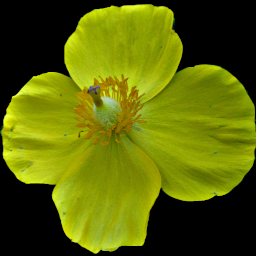
    A big, sloppy mint that likes to grow in the deep woods, with huge leaves (by mint-family standards) and panicles of bizarre yellowish flowers with long projecting stamens. The flowers look like little dragons, and well repay a close look, perhaps with a glass. Only a few of the flowers are open at any one time; the rest are either still in bud or shriveling on the stem, adding to the general appearance of slovenliness. The scent is like cheap artificial lemon perfume. The flowers above were blooming in Scott Township at the end of August; the ones below in the woods near Normalville in the middle of August.

    Gray describes the genus (which has only one species in our area) and the species.

    COLLINSÒNIA L. HORSE BALM. Calyx ovoid, enlarged and declined in fruit, 2-lipped; upper lip truncate and flattened, 3-toothed, the lower 2-cleft. Corolla elongated, expanded at the throat, somewhat 2-lipped, the tube with a bearded ring within; the 4 upper lobes nearly equal, but the lower much larger and longer, pendent, toothed or lacerate-fringed. Stamens 2 (sometimes 4, the upper pair shorter), much exserted, diverging; anther-cells divergent. — Strong-scented perennials, with large ovate leaves, and yellowish flowers on slender pedicels. (Named in honor of Peter Collinson, early English botanist.)

    С. canadensis L. (RICH-WEED, STONE-ROOT.) Nearly smooth, 5-10 dm. high; leaves serrate, pointed, petioled, 1-2 dm. long; panicle loose; corolla 1.5 cm. long, lemon-scented; stamens 2.—Rich moist woods, w. Que. to Wise., s. to Fla. and Mo. July-Sept.

  • Wild Basil (Satureja vulgaris)

    A hairy and aromatic little mint that likes open woods, and is not above popping up in a shaded lawn, as this one did near Normalville. It’s a close relative of Summer and Winter Savory. The flowers are a delightfully pure shade of pink, hard to reproduce exactly in a photograph.

    Gray describes the genus and the species:

    SATURÈJA [Tourn.] L. SAVORY, CALAMINT. Calyx tubular to bell-shaped, 10-13-nerved, naked or hairy in the throat. Corolla with a straight tube and an inflated throat, distinctly 2-lipped; the upper lip erect, flattish, entire or notched; the lower spreading, 3-parted, the middle lobe usually largest. Stamens 4, somewhat ascending. — Herbs or shrubs, with mostly purplish or whitish flowers produced all summer; inflorescence various. (The ancient Latin name.) Including Clinopodium L., Calamintha Lam.

    Flowers in sessile dense many-flowered clusters, and involucrate with conspicuous setaceous-subulate bracts; calyx nearly naked in the throat.

    6. S. vulgàris (L.) Fritsch. (basil.) Hairy, erect, 2-6 dm. high; leaves ovate, petioled, nearly entire; flowers lavender to pink, in globular clusters; hairy bracts as long as the calyx. (Clinopodium L.; Calamintha Clinopodium Benth.) —Woods, thickets, and alluvial banks, Nfd. to Va., О., Ind., and Man. (Eurasia.)

  • Lamb’s Ear (Stachys byzantina)

    The fleshy soft, hairy leaves delight children and any adult not too far gone to take pleasure in simple tactile sensations. The purple flowers make a gorgeous contrast to the whitish hairs of the leaves and stems, but appear only for a relatively short time. This is a garden favorite that seeds itself liberally: once you plant Lamb’s Ears, you have them forever, and they pop up in unexpected places. They can often be found in the city as an escape; these plants were growing on a bank in Beechview, where they were blooming in the middle of May.

    Gray describes the genus Stachys; in his time, this particular species had not established itself in the wild enough for him to take notice of it.

    STÂCHYS [Tourn.] L. HEDGE NETTLE. Corolla not dilated at the throat; upper lip erect or rather spreading, often arched, entire or nearly so; the lower usually longer and spreading, 3-lobed, with the middle lobe largest and nearly entire. Stamens 4, ascending under the upper lip (often reflexed on the throat after flowering); anthers approximate in pairs. Nutlets obtuse, not truncate. — Whorls 2-many-flowered, approximate in a terminal raceme or spike (whence the name, from stachys, a spike).

    Although Gray does not describe the species S. byzantina, no description is really necessary. No other Stachys in our area has anything like the silver-haired foliage of this plant; it is nearly impossible to misidentify.