Author: Father Pitt

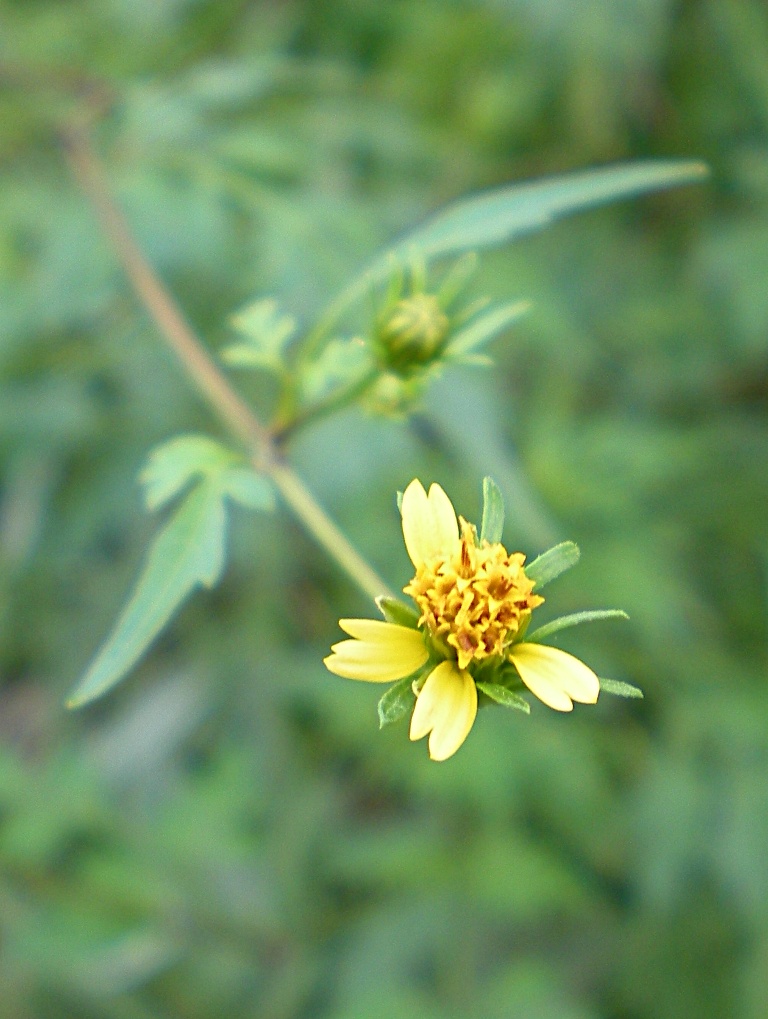
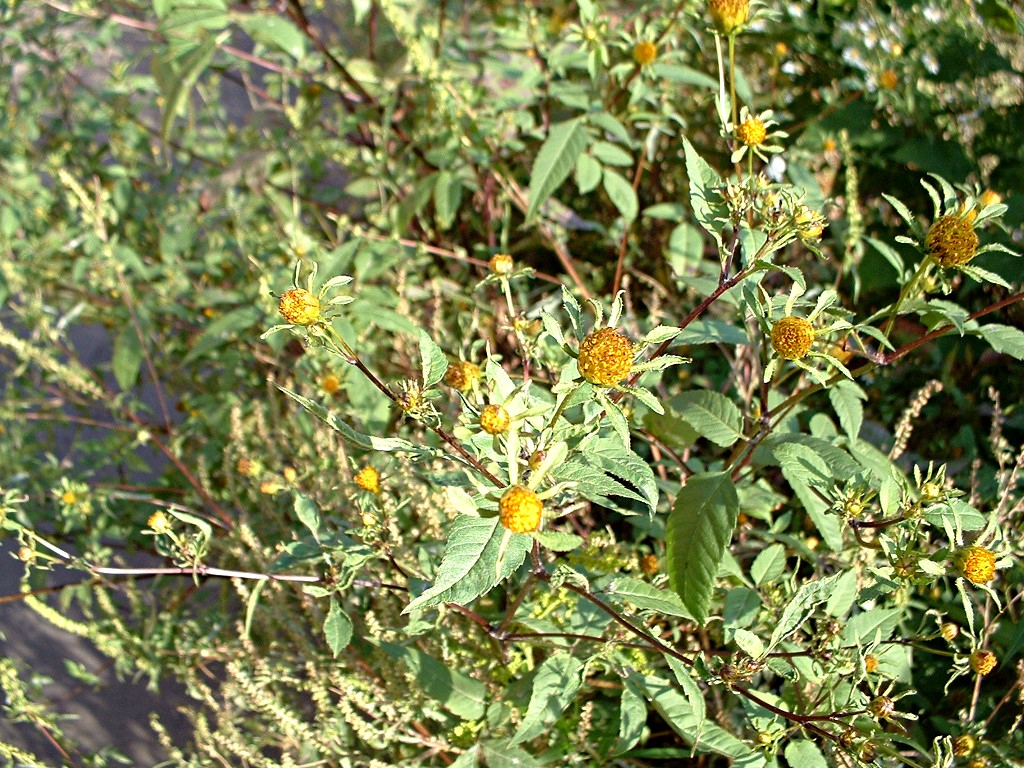
  • Rayless Marigold (Bidens frondosa)

    Bidens-frondosa-2009-10-01-01

    Also known as Beggar-Ticks or Sticktight. It looks like a big single marigold from which someone has plucked off all the rays. As with Spanish Needles, the hooked seeds stick to animal fur or clothing. The species is variable, and Gray notes that it hybridizes even across genera. This plant grew at the edge of an alley in the South Side flats.

    From Gray’s Manual: B. Frondosa, L. (COMMON BEGGAR-TICKS, STICK-TIGHT.) Smooth or rather hairy, tall (2-6° high), branching; leaves 3-5 divided; leaflets mostly stalked, lanceolate, pointed, coarsely toothed; outer involucre much longer than the head, ciliate below; achenes wedge-shaped, 2-awned, ciliate (the bristles ascending except near the summit). —Moist waste places; a coarse troublesome weed, the achenes, as in the other species, adhering to clothing, etc., by their retrorsely barbed awns. Hybrids occur with Coreopsis aristosa and other species. July-Oct.

  • Snow-on-the-Mountain (Euphorbia marginata)

    Euphorbia-marginata-2008-08-16-01

    A native of the Midwest, but so often cultivated in the East that it has become an established weed, especially in old city lots and along railroad tracks. This colony grew along a residential street in Beechview. It makes an attractive cut flower, but the stems have a milky sap that may be irritating to the skin.

    From Gray’s Manual of Botany: E. marginata Pursh. (SNOW-ON-THE-MOUNTAIN.) Stem stout, 3-9 dm. high, erect, hairy; leaves sessile, ovate or oblong, acute; umbel with three dichotomous rays; glands of the involucre with broad white appendages. Minn, to Mo., Col., Tex., and S. C.; spreading eastw. to O., and frequently escaping from flower-gardens.

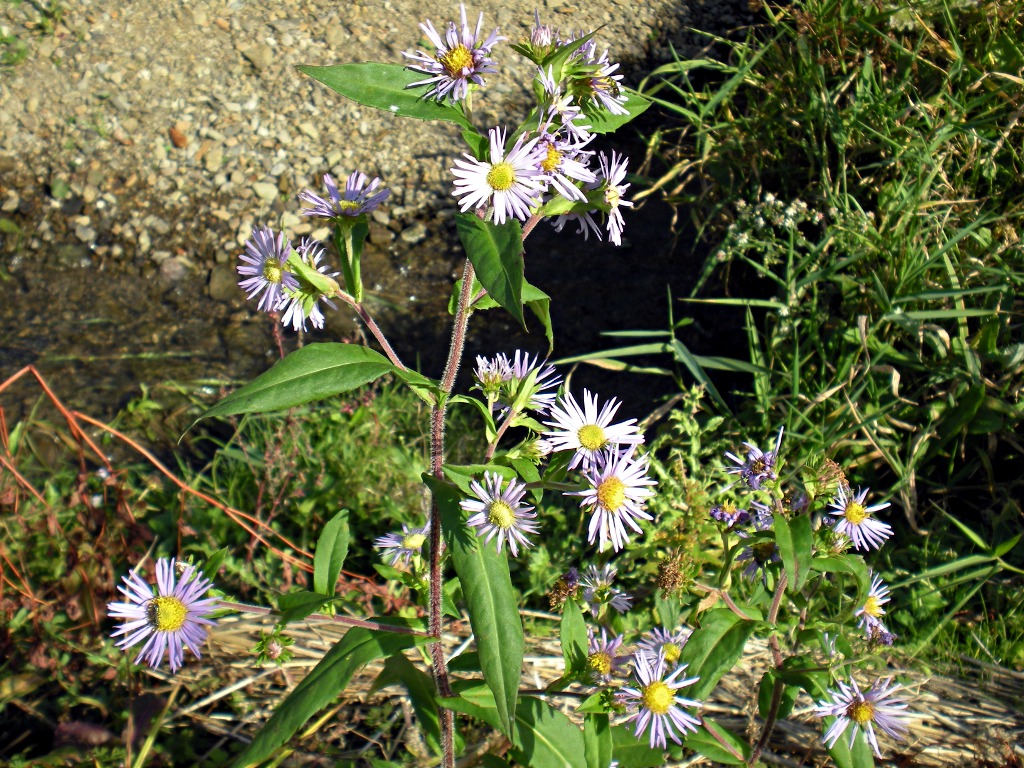
  • Purple-Stemmed Aster (Aster puniceus)

    Aster-puniceus-2009-10-22-Wexford-01

    UPDATED: An earler version of this post included a picture that was probably not Aster puniceus. Identifying asters is a fool’s game. Torrey & Gray’s Flora of North America lists 131 species of Aster, and the chances are good that the particular aster you’ve found by the roadside won’t exactly fit the description of any one of them. But this picture shows a plant that actually looks pretty much like what Aster puniceus is supposed to look like.

    Now Symphyotrichum puniceum, but the generic name Symphyotrichum is still so little known that most people looking for this plant will still know it as Aster. These common blue asters like slopes above streams and squishy wet ground. They are quite variable: Britton & Brown say that “races differ in pubescence, leaf-form, and leaf-serration,” meaning that anything you say about the shape of the leaves or how rough or hairy they are has to be followed by the words “or not.” The leaves of these plants were rough and sandpapery, and the stem quite hairy. These grew on the bank of a brook near Wexford.

    From Gray’s Manual of Botany: A puniceus, L.  Stem tall and stout 3-7° high, rough-hairy all over or in lines, usually purple below, panicled above; leaves oblong-lanceolate, not narrowed or but slightly so to the auricled base, rough above, nearly smooth beneath, pointed; heads 4-6″ high, subsessile; scales narrowly linear, acute, loose, equal, in about 2 rows; rays long and showy (lilac-blue, paler in shade). —Low thickets and swamps, very common.

  • Everlasting Pea (Lathyrus latifolius)

    Lathyrus-latifolius-2009-09-30-02

    Sometimes called Perennial Sweet Pea. These weedy vines cover hillsides in residential neighborhoods, often where they had been planted generations before. Once you have Everlasting Peas, you have them forever. But is that such a bad thing?

    From Gray’s Manual of Botany: L. latifolius L. (EVERLASTING or PERENNIAL PEA.) Tall perennial with broadly winged stems; leaves and stipules coriaceous and veiny; petioles mostly winged; the 2 elliptic to lanceolate leaflets 0.5-1 dm. long; peduncles stiff, many-flowered; flowers showy, pink, purple, or white. Frequently cultivated, and escaping to roadsides and thickets, Ct. to D. C. (Introd. from Eu.)

    (This was from the 1908 edition. The 1890 edition does not list Lathyrus latifolius, suggesting that it had not yet become established as a frequent escape.)

  • Spanish Needles (Bidens bipinnata)

    Bidens-bipinnata-01-1024

    This is one of those flowers that reward a close look. The flowers are like tiny marigolds, and indeed they’re sometimes called bur-marigolds. The seeds, long and narrow like marigold seeds, have hooks that stick in animal fur or people’s clothes. These grew at the edge of a yard in Beechview.

    From Gray’s Manual of Botany: B. bipinnata L. (SPANISH NEEDLES.) Smooth annual, branched; leaves 1-3-pinnately parted, petioled; leaflets ovate-lanceolate, mostly wedge-shaped at the base; heads small, on slender peduncles; outer involucre of linear bracts equaling the short pale yellow rays; achenes 4-grooved, nearly smooth, 3-4-awned, very unequal. Damp soil, R. I., westw. and southw.; occasional on ballast northw.