Author: Father Pitt

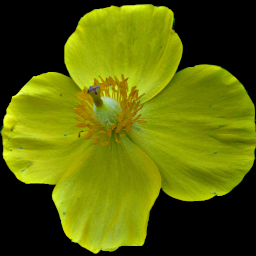
  • Smooth Yellow Violet (Viola pensylvanica)

    KONICA MINOLTA DIGITAL CAMERA

    A violet with smooth leafy stems, distinguishing it from the otherwise very similar V. pubescens, of which many botanists consider it a variety (var. scabriuscula). These plants were blooming at the beginning of May on a wooded hillside overlooking a stream in Bird Park, Mount Lebanon.

    KONICA MINOLTA DIGITAL CAMERA

    Gray lists this as Viola scabriuscula; others as V. pubescens var. scabriuscula or V. eriocarpa.

    VtOLA [Tourn.] L. VIOLET. HEART’S-EASE. Revised By E. Brainerd. Petals somewhat unequal, the lower one spurred at the base. Stamens closely surrounding the ovary, often slightly cohering with each other; the two lower bearing spurs which project into the spur of the corolla. Besides these conspicuous blossoms, which appear in spring, others are produced later, on shorter peduncles or on runners, often concealed under the leaves; these never open nor develop petals, but are fertilized in the bud and are far more fruitful than the ordinary blossoms. —The closely allied species of the same section, when growing together, often hybridize with each other, producing forms that are confusing to the student not familiar with the specific types. The hybrids commonly display characters more or less intermediate between those of the parents, and show marked vegetative vigor but greatly impaired fertility. (The ancient Latin name of the genus.)

    Plants with leafy stems.

    Style capitate, beakless, bearded at the. summit; spur short; stipules entire, the lower more or less scarious.

    Stems few, mostly erect, not leafy below.

    Petals yellow.

    Sparingly pubescent; root-leaves usually 1-2; stem-leaves rarely over 7 cm. wide.

    V. scabriuscula Schwein. (SMOOTH YELLOW V.) Similar to the preceding [V. pubescens], with which it intergrades; the more pronounced forms have commonly 2-4 stems and 1-3 radical leaves from one rootstock, the stems shorter and more leafy, the leaves smaller and sparingly pubescent to glabrate, the time of flowering earlier; flowers, capsules, and seeds as in the preceding [petals purple-veined, the lateral bearded ; sepals narrowly lanceolate, acute; apetalous flowers abundant in summer on short peduncles; capsules ovoid, glabrous or woolly ; seeds light brown, large, nearly 3 mm. long].  Moist thickets, often in heavy soil, e. Que. to L. Winnipeg, and southw.

  • Japanese Barberry (Berberis thunbergii)

    KONICA MINOLTA DIGITAL CAMERA

    A foreign invader; it makes a fine hedge, but it is beginning to show up where it is not wanted. The tiny flowers probably go unnoticed most of the time, but they make a very pretty display close up. The long thorns and spoon-shaped leaves are distinctive. This one was blooming at the beginning of May on a wooded hillside in Mount Lebanon.

    KONICA MINOLTA DIGITAL CAMERA

    The National Park Service (in a “least wanted” posting) gives us this description:

    Japanese barberry is a dense, deciduous, spiny shrub that grows 2 to 8 ft. high. The branches are brown, deeply grooved, somewhat zig-zag in form and bear a single very sharp spine at each node. The leaves are small (½ to 1 ½ inches long), oval to spatula-shaped, green, bluish-green, or dark reddish purple. Flowering occurs from mid-April to May in the northeastern U.S. Pale yellow flowers about ¼ in (0.6 cm) across hang in umbrella-shaped clusters of 2-4 flowers each along the length of the stem. The fruits are bright red berries about 1/3 in (1 cm) long that are borne on narrow stalks. They mature during late summer and fall and persist through the winter.

  • Crabapple (Malus coronaria)

    KONICA MINOLTA DIGITAL CAMERA

    Crabapple blossoms light up the woods around here before the leaves appear on most of the trees. These trees were blooming in late April near the edge of the woods in Mount Lebanon. More Crabapple pictures are here.

    KONICA MINOLTA DIGITAL CAMERA

    Gray places the genus Malus as a section in the larger genus Pyrus, but most modern botanists treat Malus separately. Gray’s description:

    PYRUS [Tourn.] L. Calyx-like receptacle urn-shaped, bearing б sepals. Petals roundish or obovate. Stamens numerous. Styles 2-5. Fruit a large fleshy pome, or smaller and berry-like, the 2-6 cells imbedded in the flesh, papery or cartilaginous, mostly 2-seeded. —Trees or shrubs, with showy flowers in corymbed or umbellike cymes. (The classical name of the Pear-tree.) A large genus, often subdivided, but with sections less strongly or constantly marked than our few species would suggest.

    MALUS (Hill) S. F. Gray. (APPLE.) Leaves simple; orifice of concave receptacle open; flesh of large subglobular fruit copious, free from sclerotic cells. Malus [Tourn.] Hill.

    Leaves and usually the outer surface of the calyx-lobes glabrate.

    Calyx-lobes persistent in fruit.

    P. coronaria L. (AMERICAN CRAB.) Tree, somewhat armed, 6-10 m. high; leaves ovate or elliptic, usually rounded or even cordate at the base; those of the sterile shoots somewhat triangular-ovate and lobed, sharply serrate; petals broadly obovate, white or nearly so; pome greenish-yellow, hard and sour, 2-2.6 cm. in diameter, depressed-globose. (Malus Mill.) — Thickets and open woods, N. J. to Ont., Kan., and southw.

  • Wake-Robin, White Form (Trillium erectum var. album)

    KONICA MINOLTA DIGITAL CAMERA

    Two early bloomers among the Trilliums in Bird Park, Mount Lebanon, where they were beginning to bloom in late April. This species is most commonly mahogany red in most of its range, but in our area the white form (more pictures here and here) is most common. There is also a pink form and a greenish-yellow form.

    KONICA MINOLTA DIGITAL CAMERA

    Gray describes the genus and the species:

    TRÍLLIUM L. WAKE ROBIN. BIRTHROOT. Sepals 3, lanceolate, spreading, herbaceous, persistent. Petals 3, larger, withering in age. Stamens б; anthers linear, on short filaments, adnate. Styles awl-shaped or slender, spreading or recurved above, persistent, stigmatic down the inner side. Seeds ovate, horizontal, several in each cell. — Low perennial herbs, with a stout and simple stem rising from a short and praemorse tuber-like rootstock, bearing at the summit a whorl of 3 ample, commonly broadly ovate, more or less ribbed but netted-veined leaves, and a terminal large flower; in spring. (Name from tree, three; all the parts being in threes.) — Monstrosities are not rare with the calyx and sometimes petals changed to leaves, or the parts of the flower increased in number.

    Ovary and fruit 6-angled and more or less winged.

    Flower pediceled; connective narrow, not produced; leaves subsessile.

    Anthers at anthesis exceeding the stigmas.

    T. eréctum L. Leaves very broadly rhombic, shortly acuminate ; peduncle (2—8 cm. long) usually more or less inclined or declínate; petals ovate to lanceolate (18-36 mm. long), brown-purple or often white or greenish or pinkish; stamens exceeding the stout distinct spreading or recurved stigmas; ovary purple; fruit ovoid, 2.5 cm. long, reddish. — Rich woods, e. Que. to Ont., southw. to Pa. and in the mts, to N. C. — Flowers ill-scented.

  • Common Blue Violet (Viola sororia)

    KONICA MINOLTA DIGITAL CAMERA

    Ubiquitous in lawns, and there are some unaccountably dour types who try to eradicate it. Violets cause no harm; they never grow too high and are easily mowed, and they give us flowers like these, which were blooming on Easter Sunday in the middle of April in a lawn in Mount Lebanon. If you think nothing but identical blades of grass should make up a lawn, then you miss half the poetry of having a plot of land in the first place.

    KONICA MINOLTA DIGITAL CAMERAGray, with assistance from Brainerd, describes the genus and the species:

    VIOLA [Tourn.] L. VIOLET, HEART’S-EASE. [Revised by E. Brainerd.] Petals somewhat unequal, the lower one spurred at the base. Stamens closely surrounding the ovary, often slightly cohering with each other; the two lower bearing spurs which project into the spur of the corolla. Besides these conspicuous blossoms, which appear in spring, others are produced later, on shorter peduncles or on runners, often concealed under the leaves; these never open nor develop petals, but are fertilized in the bud and are far more fruitful than the ordinary blossoms. — The closely allied species of the same section, when growing together, often hybridize with each other, producing forms that are confusing to the student not familiar with the specific types. The hybrids commonly display characters more or less intermediate between those of the parents, and show marked vegetative vigor but greatly impaired fertility. (The ancient Latin name of the genus.)

    Plants stemless, the leaves and scapes directly from a rootstock or from runners.

    Style dilated upward in a vertical plane, capitate, with a conical beak on the lower side; stigma within the tip of the beak.

    Rootstock fleshy and thickened, without runners; petals violet-blue to purple, the lateral bearded (Blue Violets).

    Leaves heart-shaped, the margins merely eremite-serrate.

    Plants more or less pubescent.

    Leaves all undivided.

    Spurred petal glabrous or bearing only scattered hairs; capsules 8—12 mm. long.

    V. sororia. In size and habit like no. 7 (V. papillonacea), into which it passes; leaves villous-pubescent especially on the petioles and under surface when young; vernal flowers on peduncles about the length of the leaves, violet to lavender and occasionally white; outer sepals ovate-oblong, commonly obtuse, ciliolate below the middle and on the short rounded auricles; cleistogamous flowers ovoid, on short prostrate peduncles; capsules of these usually purple; seeds dark brown. (V. palmata, var. Pollard.) — Moist meadows, alluvial woods, shady hedges and dooryards, w. Que. to Minn., and southw.