Author: Father Pitt

  • Helleborine (Epipactis helleborine)

    Epipactis-helleborine-2013-07-06-Frick-Park-02

    A spike of fascinating little orchid flowers, with broad pointed leaves alternate on the stem. The distinctive flowers have lips that look like little slippers filled with chocolate sauce. The color of the flowers is quite variable, according to botanical references; they may be yellowish, or green, or purple.  The species probably came from Europe, apparently as a medicinal herb, and by the middle 1800s had established itself on our continent.

    The species is quite uncommon around here, though it seems there are a few places in North America where it can be an annoying weed. (UPDATE: Having written this, we discovered the very next day that one of those places is Schenley Farms, where Helleborine grows abundantly on otherwise neatly kept shady front banks.) This plant grew in the woods in Frick Park, where it was blooming in early July.

    Gray calls the genus by an alternate name, Serapias:

    SERÀPIAS L. Flowers in a loose or somewhat dense bracteose raceme. Sepals ovate-lanceolate, strongly keeled. Petals shorter, ovate, acute. Lip strongly saccate at base, the apical part broadly cordate, acute, with a raised scallus in the middle and two inconspicuous nipple-like protuberances on each side near the point of anion with the sac. Column broad at the top, the basal part narrower; anther sessile, behind the broad truncate stigma on a slender-jointed base; pollen farinaceous, becoming attached to the gland capping the small rounded beak of the stigma. — Stem leafy. (Named for the Egyptian deity Serapis.) Epipactis of auth., not Boehm.

    S. helleborine L. Plants 25-60 cm. high; leaves clasping the stem, conspicuously nerved, broadly ovate to lanceolate, acute; perianth about 8 mm. long, green suffused with madder-purple; lip similarly colored, but darker within, the apical portion as if jointed with the sac, bituberculate at base. (Epipactis helleborine Crantz; E. latifolia All.; E. viridiflora Reichenb.) — Rare and local, Que. and Ont. to Mass., N. T., and Pa. —Probably introduced from Europe in early times on account of supposed medicinal value. July-Aug. (Eu.)

    Epipactis-helleborine-2013-07-06-Frick-Park-01
  • Catalpa (Catalpa bignonioides)

    Catalpa-bignonioides-2013-06-29-Frick-Park-01

    Catalpa-bignonioides-2013-06-29-Frick-Park-02

    Also known in Pittsburgh as “Indian stogie” for its long, cigar-like seedpods. The combination of pyramids of white flowers and large, heart-shaped leaves marks the tree unmistakably as a Catalpa. But which one? There are, confusingly, two very similar species of Catalpa in our range, neither one of them strictly native. This one, the Southern Catalpa, is the only one recorded in Allegheny County; there is also a Northern Catalpa (C. speciosa) found in some of the suburbs.

    This is very much an urban tree, planted originally as an ornamental, but now a very common weed tree in the city. It rapidly becomes less common as we get further out into the suburbs, and is completely unknown in Butler and Indiana Counties (where, however, the Northern Catalpa is sometimes seen). This tree was blooming in Frick Park in late June.

    Gray describes the genus and the species:

    CATALPA Scop. CATALPA. INDIAN BEAN. Calyx deeply 2-lipped. Corolla bell-shaped, swelling; the undulate 5-lobed spreading border irregular and 2-lipped. Fertile stamens 2, or sometimes 4; the 1 or 3 others sterile and rudimentary. Capsule very long and slender, nearly cylindrical, 2-celled, the partition at right angles to the valves. Seeds winged on each side, the wings cut into a fringe. —Trees, with ovate or cordate and mainly opposite leaves. (The aboriginal name.)

    C. bignonioides Walt. A low much branched tree, with thin bark; corolla smaller (2.5-4 cm. long), thickly spotted, with oblique limb and entire lower lobe; capsule much thinner. (C. catalpa Karst.)—Naturalized from N. Y, southw.; indigenous on the Gulf coast.

  • Celandine Poppy (Stylophorum diphyllum)

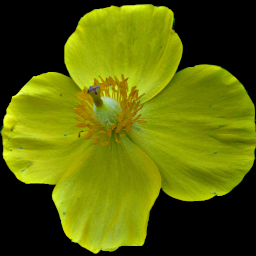
    Stylophorum-diphyllum-2013-05-08-Fox-Chapel-02Stylophoruum-diphyllum-2013-05-08-Fox-Chapel-01Like a larger version of the Celandine, this bright yellow poppy blooms at the same time, but is easily distinguished by its larger flowers with overlapping petals and bright orange stamens. This plant was blooming in early May along the Trillium Trail in Fox Chapel.

    Gray describes the genus and the species:

    STYLOPHORUM Nutt. CELANDINE POPPY. Sepals 2, hairy. Petals 4. Style distinct, columnar; stigma 2-4-lobed. Pods bristly, 2-4-valved to the base. Seeds conspicuously crested. — Perennial low herbs, with stems naked below and oppositely 2-leaved, or sometimes 1-3-leaved, and umbellately 1-few-flowered at the summit; the flower-buds and the pods nodding. Leaves pinnately parted or divided. Juice yellow. (From stylos, style, and pherein, to bear, one of the distinctive characters.)

    S. diphyllum (Michx.) Nutt. Leaves pale beneath, smoothish, deeply pinnatifid into бог 7 oblong sinuate-lobed divisions, and the root-leaves often with a pair of small distinct leaflets; peduncles equaling the petioles; flower deep yellow (5 cm. broad); stigmas 3 or 4; pod ovoid. —Damp woods, w. Pa. to Wisc., ” Mo.,” and Tenn. May. —Foliage and flower resembling Celandine.

  • Star of Bethlehem (Ornithogalum umbellatum)

    Ornithogalum-umbellatum-2013-05-21-Brookline-01

    A European native that has made itself quite at home here, Star of Bethlehem can often be found in weedy patches of low grass. Until it blooms, its narrow leaves are hard to distinguish from the grass around them. The six-pointed white flowers are unmistakable, with six yellow-tipped stamens whose flattened “filaments” seem to form a miniature duplicate flower inside the larger one. This plant was blooming in late May beside a gas-station parking lot in Brookline.

    Although most traditional references place the Star of Bethlehem in the lily family Liliaceae, modern botanists separate it into the asparagus family Asparagaceae.

    Gray describes the genus and the species:

    ORNITHÓGALUM [Tourn.] L. STAR OF BETHLEHEM. Perianth of 6 (white) spreading 3-7-nerved divisions. Filaments 6, flattened-awl-shaped. Style 3-sided; stigma 3-angled. Capsule roundish-angular, with few dark and roundish seeds in each cell, loculicidal. — Scape and linear channeled leaves from a coated bulb. Flowers corymbed, bracted; pedicels not jointed. (A whimsical name from ornis, a bird, and gala, milk.)

    O. umbellàtum L. Scape 1-2.5 dm. high; flowers 5-8, on long and spreading pedicels; perianth-divisions green in the middle on the outside. — Escaped from gardens. (Introd. from Eu.)

  • Black Locust (Robinia pseudoacacia)

    Robina-pseudoacacia-2013-05-18-Beechview-01This tree is ubiquitous in southwestern Pennsylvania, so it may come as some surprise to Pittsburghers that we live at the northern end of a native range that is actually very small, mostly in the Appalachians and foothills. The Black Locust has been much planted elsewhere, however, and may easily naturalize itself. It is in many ways an ideal urban tree: it grows fast, tolerates city conditions with no complaints, and has showy clusters of white pea flowers after most of the other flowering trees have stopped blooming. It does, however, have one serious flaw. Mature specimens are brittle, and can easily drop large branches in storms, crushing cars or bringing down power lines. When your power goes out in a thunderstorm, there’s a very good chance you have a Black Locust to blame.

    The dangling chains of white pea-shaped flowers are unique among our native trees. Leaves are pinnately compound, with smooth-edged elliptical leaflets. The leaves often turn yellow and begin to drop in August, long before any other trees are even thinking about autumn. Mature trees have rough and shaggy bark, and often show scars of broken branches.

    Gray describes the genus and the species (which he spells “Pseudo-Acacia”):

    ROBÍNIA L. LOCUST. Calyx short, 5-toothed, slightly 2-lipped. Standard large and rounded, turned back, scarcely longer than the wings and keel. Stamens diadelphous. Pod linear, flat, several-seeded, at length 2-valved. — Trees or shrubs, often with spines for stipules. Leaves odd-pinnate, the ovate or oblong leaflets stipellate. Flowers showy, in hanging axillary racemes. (Named for John Robin, herbalist to Henry IV. of France, and his son Vespasian Robin, who first cultivated the Locust-tree in Europe.)

    R. Pseùdo-Acàcia L. (common L., False Acacia.) Branches glabrous or glabrate; racemes slender, loose; flowers white, fragrant; pod smooth.— Along the mts., Pa. to Ga., and in the Ozark Mts. of Mo., Ark., and Okla.; commonly cultivated as an ornamental tree, and for its valuable timber, and naturalized in many places. May, June.