Author: Father Pitt

  • Yellow Archangel (Lamium galeobdolon)

    Lamium-galeobdolon-2013-05-08-Fox-Chapel-01A European plant often cultivated here as a ground cover, but increasingly escaping into the wild. This plant was growing deep in the woods in Fox Chapel, on a hillside overlooking the Squaw Run, far from any cultivated planting. It is also commonly placed in the genus Lamiastrum, or “False Lamium.” So it is classified in the USDA PLANTS database, which records it as found in the wild in Pennsylvania. This particular plant, which shows the variegated leaves often found in cultivated varieties, was blooming in early May.

    Gray describes the genus Lamium thus:

    LAMIUM L. DEAD NETTLE. Calyx tubular-bell-shaped, about 5-nerved, with 5 nearly equal awl-pointed teeth. Corolla dilated at the throat; upper lip ovate or oblong, arched, narrowed at the base; the middle lobe of the spreading lower lip broad, notched at the apex, contracted as if stalked at the base; the lateral ones small, at the margin of the throat. Decumbent herbs, the lowest leaves small and long-petioled, the middle heart-shaped and doubly toothed, the floral subtending the whorled flower-cluster. (Name from lamos, throat, in allusion to the ringent corolla.)

    This species is not described in the standard American botanical references, so we borrow a very thorough description from English Botany by James Sowerby.

    LAMIUM GALEOBDOLON. Crantz.

    Galeobdolon luteum, Ends. Sm. Engl. Bot. ed. i. No. 787. Koch, Syn. Fl. Germ. et Helv. ed. ii. p. 650. Galeopsis Galeobdolon, Linn. Sp. Pl. p. 810.

    Perennial. Rootstock tufted or very shortly creeping. Barren shoots very long, trailing or arching, at length rooting. Flowering stems not rooting at the base, erect or ascending. Leaves stalked, ovate or deltoid-ovate, subcordate, slightly acuminate, acute, doubly or irregularly crenate-serrate. Verticillasters remote from each other. Lower bracts similar to the leaves, but narrower, and with shorter stalks; upper ones generally lanceolate, with a wedge-shaped base, more rarely similar to the lower ones. Calyx puberulent or sparingly bristly-hairy; teeth deltoid, abruptly acuminated into triangular points, sparingly ciliated or glabrous, and subspinous at the apex, spreading, not half the length of the tube; tube slightly curved and oblique at the mouth. Corolla tube rather longer than the calyx, with a conspicuous very oblique ring of hairs within, slightly curved upwards, without a projecting sac near the base on the lower side, suddenly enlarged towards the apex; upper hp greatly vaulted, obtuse, sparingly hairy; lower lip with the lateral lobes ovate-acuminate, the middle lobe a little larger, oblong, acuminated into a lanceolate point.

    In woods and on hedge-banks, particularly on chalk and limestone formations. Local, but not uncommon in the south of England; rare in the north, where it extends north to Lancashire and Yorkshire. It has occurred in Scotland, but is scarcely deserving to be considered even as a naturalised plant. Rare, and very local in Ireland, where it is nearly confined to the east of the island.

    England, [Scotland,] Ireland. Perennial. Spring, early Summer.

    Rootstock many-headed, emitting numerous wiry radical fibres and producing flowering and barren stems, the latter in autumn attaining the length of 1 or 2 feet, and growing much in the same way as those of Vinca major. Flowering stems 9 inches to 2 feet high, more or less flexuous towards the base. Lamina of the leaves 1 to 2½ inches long. Verticillasters 6 to 10 flowered. Bracts 1½ to 3 inches long, the upper ones sometimes very narrow. Calyx yellowish-green. Corolla ¾ to 1 inch long, yellow, the lower lip bright yellow, with reddish-brown s pots and streaks; upper lip considerably more than half the length of the corolla; tube very short. Anthers destitute of the hairs which occur in all the other British species. Nucules generally abortive: at least I have never been able to find them mature. Plant light green, more or less thickly pubescent with rather stiff hairs, those on the stem deflexed.

    The British plant has the upper bracts usually narrow, and is the Galeobdolon montanum of Reichenbach. Occasionally, however, I have seen the bracts all broad and similar to the leaves (G. luteum, Reich.), but the two forms certainly do not deserve to be called even varieties.

    Yellow Archangel.
    French, Lamier jaune. German, Goldnessel.

  • Solomon’s Seal (Polygonatum biflorum)

    Polygonatum-biflorum-2013-05-08-Fox-Chapel-01

    Little green bells dangle from arching stalks, almost invisible unless you look for them. The name “Solomon’s Seal” comes from the six-pointed scar left on the root by the withered stem; the species name “biflorum” refers to the plant’s habit of growing flowers in pairs. This plant was growing along the Trillium Trail in Fox Chapel,where it was blooming in early May.

    Until flower buds appear, this plant and False Solomon’s Seal (Maianthemum racemosum) are hard to tell apart. Both have traditionally been placed in the lily family Liliaceae, but modern botanists have separated the Asparagus family Asparagaceae, taking the Solomon’s Seals with it.

    Gray describes the genus and the species:

    POLYGÓNATUM [Tourn.] Hill. SOLOMON’S SEAL. Perianth cylindrical, 6-lobed at the summit; the 6 stamens inserted on or above the middle of the tube, included; anthers introrse. Ovary 3-celled, with 2-в ovules in each cell; style slender, deciduous by a joint; stigma obtuse or capitate, obscurely 3-lobed. Berry globular, black or blue; the cells 1-2-seeded. — Perennial herbs, with simple stems from creeping knotted rootetocks, naked below, above bearing nearly sessile or half-clasping nerved leaves, and axillary nodding greenish flowers; pedicels jointed near the flower. (Name from poly-, many, and gony, knee, alluding to the numerous joints of the rootstock.)

    P. biflòrum (Walt) Ell. (SMALL S.) Glabrous, except the ovate-oblong or lance-oblong nearly sessile leaves, which are commonly minutely pubescent as well as pale or glaucous underneath; stem slender (3-9 dm. high); peduncles 1-3- but mostly 2-flowered; perianth 10-12 mm. long; filaments papillose-roughened, inserted toward the summit of the perianth. (? P. boreale Greene; P. cuneatum Greene; Salomonta biflora Farwell.) — Wooded hillsides, N. B. to Fla., w. to Ont., e. Kan., and Tex.


  • Celandine (Chelidonium majus)

    Chelidonium-majus-2013-05-15-Schenley-Park-01

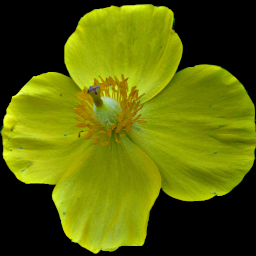
    Not related to the Lesser Celandine, this greater Celandine is a member of the poppy family that likes to grow at the edge of the woods. These plants were growing by one of the tufa bridges in Schenley Park, where they were blooming in the middle of May.

    Gray describes the genus and the species:

    CHELIDONIUM [Tourn.] L. CELANDINE. Sepals 2. Petals 4. Stamens 16-24. Style almost none; stigma 2-lobed. Pod linear-cylindric, smooth, 2-valved, the valves opening from the bottom upward. Seeds crested. —Biennial herb with brittle stems, saffron-colored acrid juice, pinnately divided or 2-pinnatifid and toothed or cut leaves, and small yellow flowers in a pedunculate umbel; buds nodding. (Ancient Greek name, from chelidon, the swallow, because its flowers appear with the swallows.)

    С majus L.— Rich damp soil about towns, centr. Me. to Ont., and southw., common from s. Me. to Pa. May-Aug. (Nat. from Eu.)

  • Spring Cress (Cardamine bulbosa)

    Cardamine-bulbosa-2013-05-03-Bird-Park-01A relative of the Toothworts (which most botanists now also place in the genus Cardamine), this pretty little flower seems to like damp locations. This one was growing in a damp open woods in Bird Park in Mount Lebanon, where it was blooming in early May. The round leaves (changing to long and narrow as they go up the stem) distinguish this from other common species of Cardamine in our area.

    Gray describes the genus and the species:

    CARDÂMINE [Tourn.] L. BITTER CRESS. Pod linear, flattened, usually opening elastically from the base; the valves nerveless and veinless, or nearly so; placentae and partition thick. Seeds in a single row in each cell, wingless; the funiculus slender. Cotyledons aecumbent, flattened, equal or nearly so, petiolate.— Mostly glabrous perennials, leafy-stemmed, growing along watercourses and in wet places. Flowers white or purple. (A Greek name, used by Dioscorides for some cress, from its cordial or cardiacal qualities.)

    Simple-leaved perennials with tuberous base.

    С. bulbosa (Srhreb.) BSP. (SPRING CRESS.) Stems upright from a tuberous base and slender rootstock bearing small tubers, simple, or rarely forking, glabrous, in anthesis 1-1.5 dm. high; root-leaves oblong to cordate-ovate, stem-leaves 5-8, scattered, the lower ovate or oblong and somewhat petioled, the upper sessile, almost lanceolate, all often toothed; sepals greenish, with white margin; petals white, 7-12 mm. long; pods linear-lanceolate, pointed with a slender style tipped by a conspicuous stigma; seeds oval. (C. rhomboidea DC.) — Wet meadows and springs, e. Mass. to Minn., and southw. May, .June.

  • Early Meadow Rue (Thalictrum dioicum)

    Thalictrum-dioicum-2013-05-01-Fox-Chapel-01

    Thalictrum-dioicum-2013-05-01-Fox-Chapel-02Long stamens dangle and wave in the breeze, identifying this this as a male plant. As the species name implies, this species has dioecious flowers (from Greek meaning “two houses”): that is, it bears male and female flowers on separate plants. The female flowers are little upright greenish clusters, but the male flowers are more common and more charming. In spite of the common name, Early Meadow Rue seems to prefer woods to meadows; this one was growing on a rocky hillside in the Squaw Run valley in Fox Chapel, where it was blooming at the beginning of May.

    Gray describes the genus and the species:

    THALÍCTRUM [Tourn.] L. MEADOW RUE. Sepals 4-5, petal-like or greenish, usually caducous. Petals none. Achenes 4-15, grooved or ribbed, or else inflated. Stigma unilateral. Seed suspended. — Perennials, with alternate 2-3-ternately compound leaves, the divisions and the leaflets stalked; petioles dilated at base. Flowers in corymbs or panicles, often polygamous or dioecious. (A Greek name of an unknown plant, mentioned by Dioscorides.)

    Flowers dioecious or polygamous.

    Achenes sessile or subsessile, thin-walled, the ribs often connected by transverse reticulations; leaves 3-4-ternate.

    Filaments capillary, soon drooping; petioles of the stem-leaves well developed; vernal.

    T. dioicum L. (EARLY M.) Smooth and pale or glaucous, 3-6 dm. high; leaves (2-3) all with general petioles; leaflets thin, light green, drooping, suborbicular, 3-7-lobed; flowers dioecious; sepals purplish or greenish white. — Rocky woods, etc., centr. Me., westw. and southw., common. Apr., May.

    –

    Ferdinand Schuyler Mathews gives us this description in his Field Book of American Wild Flowers:

    “A beautiful but not showy, slender meadow rue with the staminate and pistillate flowers on separate plants. The bluish olive green leaves lustreless, compound, and thinly spreading; the drooping staminate flowers with generally four small green sepals, and long stamens tipped with terracotta, and finally madder purple. The pistillate flowers inconspicuously pale green. An airy and graceful species, common in thin woodlands. 1-2 feet high. Me., south to Ala., and west to Mo., S. Dak., and Kan.

    –

    Ellen Miller and Margaret Christine Whiting give us this fuller description in Wild Flowers of the North-Eastern States (1895):

    “Found in rocky woods and hillsides during April and May.

    “The branching leafy stalk grows from 1 to 2 feet high; smooth, round, and fine of fibre though strong; in color, green.

    “The leaf is 3 or 4 times divided, terminating in groups of 3 leaflets on short slender stems; the leaflets are small, rounding, slightly heart-shaped at the base, and their margins are notched in rounded scallops; the texture is exceptionally fine and thin, the surface smooth; the color, a fine cool green.

    “The flower is small and composed of 3 or 4 or 5 little, petal-like, pale green calyx-parts. Different plants bear the pistils and stamens; the flowers of the former are inconspicuous and sparse in comparison with those of the stamen-bearing plant: from these the many stamens, pale green faintly touched with tawny at the tips, droop on slender threads like little tassels. The flowers grow in loose clusters, on branching stems that spring from the leaf-joints.

    “The Early Meadow Rue is unobtrusive in color and form, but most graceful in gesture, and fine in the texture and finish of all its parts; the leafage has a fern-like delicacy, and the flower tassels of the stamen-bearing plant are airily poised.”